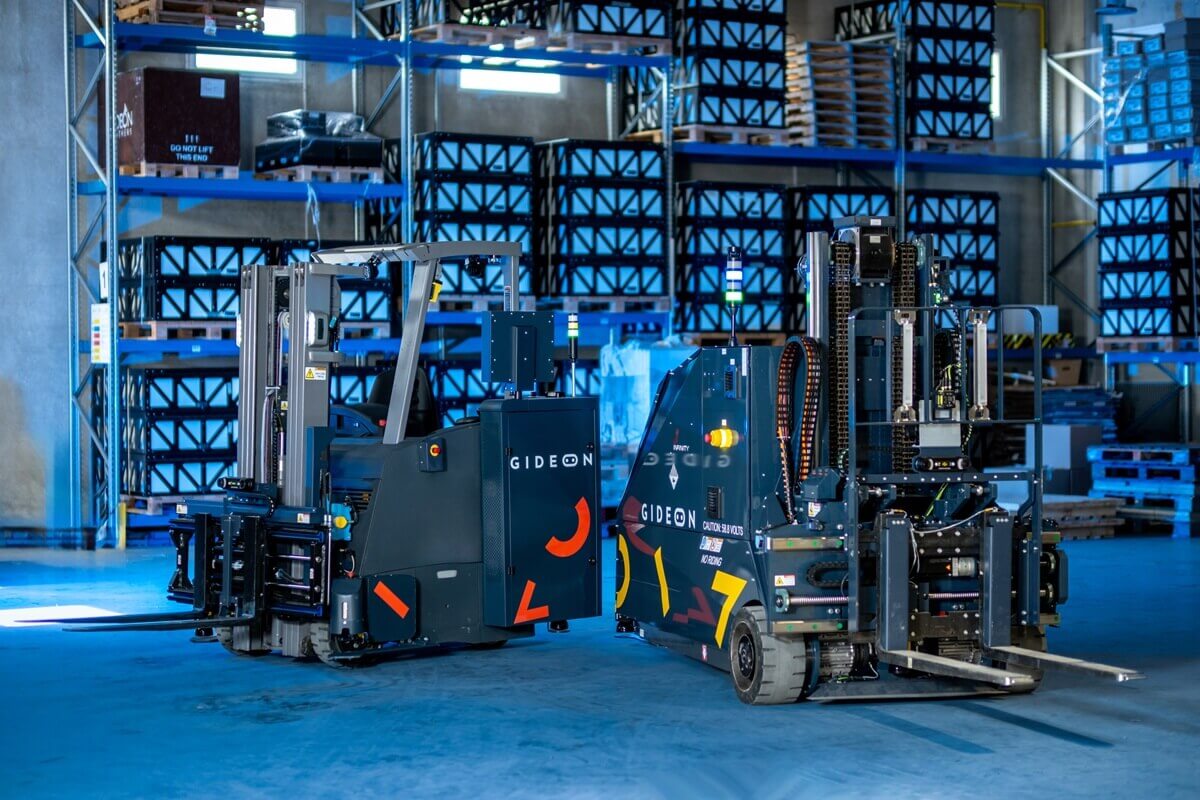
A trailer is a changing environment, not a fixed warehouse aisle. Gideon’s October 7 TREY announcement describes a commercially available autonomous forklift that uses image-based perception and sensor fusion to handle loading and unloading conditions.
Current impact
The company reports deployments in manufacturing and distribution and describes medium- and heavy-duty versions. Those claims establish the intended operating context; they do not independently prove performance at every dock or support the company’s universal superiority claims.
Potential greater impact
The immediate opportunity is automation of a difficult handoff between vehicle and warehouse. If the system handles varied pallets and trailer conditions reliably, it could make dock scheduling more predictable and reduce repetitive driving work.
What would establish progress
The greater impact depends on full-trailer completion, exception frequency and recovery time. Track human assistance and damage alongside average cycle time. The relevant outcome is a safely completed loading job, not a single successful pallet movement selected from a demonstration.
Image: Gideon / official announcement. Used for source-attributed editorial reporting; rights remain with the owner.
Sources & evidence
Sources describe the announcements and evidence available when this analysis was published. Company claims are attributed; plans and trials are not treated as sustained operation.