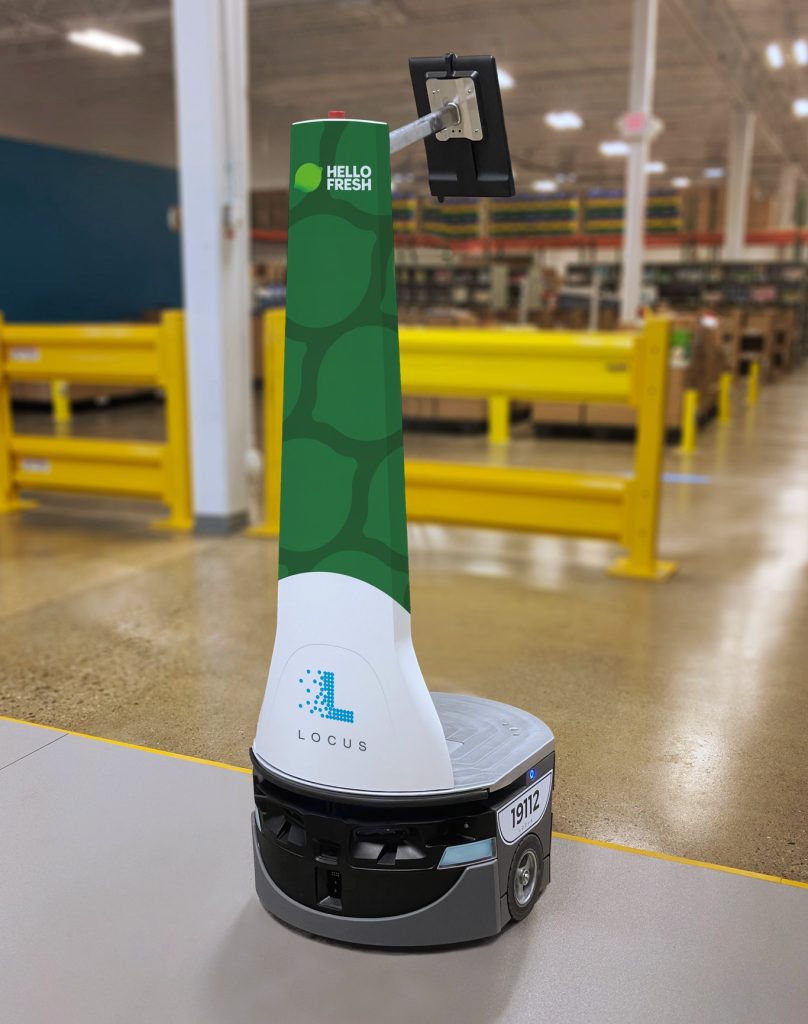
Symbotic’s July 2026 ARMS acquisition was presented as an expansion from automation execution toward broader warehouse orchestration. The company described coordinating resources and diagnosing disruptions across people and machines. That ambition makes software updates more consequential: a changed decision can affect not just one robot’s behavior, but the sequence of work around it. Symbotic acquires ARMS Innovations.
A learned robot policy can improve on a difficult task while becoming less reliable on a familiar one. That possibility makes software updates an operational event. The deployment question is not simply whether a new model is better on average. It is whether the change remains acceptable for every task the robot is authorized to perform.
Diffusion Policy, first submitted March 7, 2023, evaluated a learned action-generation method across several manipulation benchmarks. The research illustrates why performance is assessed across tasks rather than inferred from a single example. A production update needs its own comparison on the actual operating set. Diffusion Policy paper.
Preserve the known work
Our recommendation is to retain a stable acceptance suite containing representative successes, difficult boundary cases, and previous failures. A proposed update should explain which problem it addresses and show the effect on that suite. If it sacrifices one capability to improve another, the trade-off should be visible to the operator rather than hidden in an aggregate score.
ARRO's May 13, 2025, paper studied visual robustness through scene representations that mask irrelevant regions. Its experiments included different manipulation settings and generalist policies. The work provides a specific example of a change whose intended benefit should be checked alongside possible losses of useful visual information. ARRO paper.
Keep rollback practical
We would store the previous configuration and test the process for restoring it. That includes compatible sensor settings and action interfaces, not just model weights. Rollback is most useful when it has been rehearsed before a problem occurs. Dependable autonomous deployment is a sequence of controlled changes, each supported by an intelligible account of what improved and what still needs attention.
The interface changes with the machine
ABB introduced E-Device on September 21, 2026, allowing compatible customer PCs or tablets to operate OmniCore robots through dedicated safety hardware. Its documentation distinguishes the software interface from the physical controls required for manual interaction. This is a useful example of an update spanning user experience and machinery: a familiar screen does not replace the hardware and procedures that make operation possible. ABB E-Device release.
A better policy can create a new dependency
The Diffusion Policy and ARRo research discussed below concerns changes to how a robot interprets observations and produces actions. Improving those components can be valuable, but the deployment includes assumptions outside the model. A changed camera crop, control rate, or tool response can alter the effective input-output relationship even when the task description is unchanged.
That is why a model version alone is an incomplete description of a robot release. The relevant state includes the observation pipeline, controller settings, physical tooling, and environment. If a behavior changes, engineers need to know which of those components changed with it. Otherwise a regression can be attributed to the wrong layer and become harder to repair.
Fleet rollout is a coordination problem
Updating one machine in a test cell and updating a fleet serving an active warehouse are different tasks. During a rollout, old and new behavior may coexist. A scheduler may assume one timing pattern while some robots now follow another. Operators may have learned an earlier recovery procedure. The technical change and the operational transition have to remain aligned.
This does not mean improvements should be delayed indefinitely. It means the evidence should match the scope of the release. A change that improves one manipulation task may still affect throughput or exception handling elsewhere. A staged deployment can reveal those interactions before they become fleet-wide, provided the system records enough detail to compare behavior meaningfully.
The value of a reversible change
A useful update process preserves a route back to a known operating state. That route must include compatible data and configuration, not merely an older model file. If a new release changes calibration, schemas, or workflow assumptions, rolling back only the policy may not restore the previous behavior. The system needs to know what was changed together.
Symbotic’s broader software ambition makes this issue more visible because it connects decisions across the operation. ABB’s interface release shows the same principle at a smaller boundary: software flexibility still depends on physical controls and integration. Neither announcement proves a universal solution to robot updates. Both demonstrate that autonomy is delivered as a system of interacting parts.
The strongest deployment reporting will therefore describe not only what improved, but how the improvement entered service and how its effects were checked. That is the evidence that turns a promising model change into a credible operational release.
The research context
The May 2025 ARRo research examined ways to improve robot-policy robustness through changes to the visual information supplied to models. Its relevance to deployment is that behavior can change even when the underlying policy family remains familiar. A preprocessing adjustment can alter what the robot attends to, just as a new checkpoint can alter its action choice. Release records should therefore describe the entire observation-to-action path. Without that record, a team may struggle to reproduce a regression or understand why a previously successful task now fails. The practical unit of change is the assembled system, including the inputs it exposes and the limits imposed on its outputs. Original research source.
Sources & evidence
This archive preserves its original editorial date. Sources describe the events and announcements discussed; they do not establish today’s status.