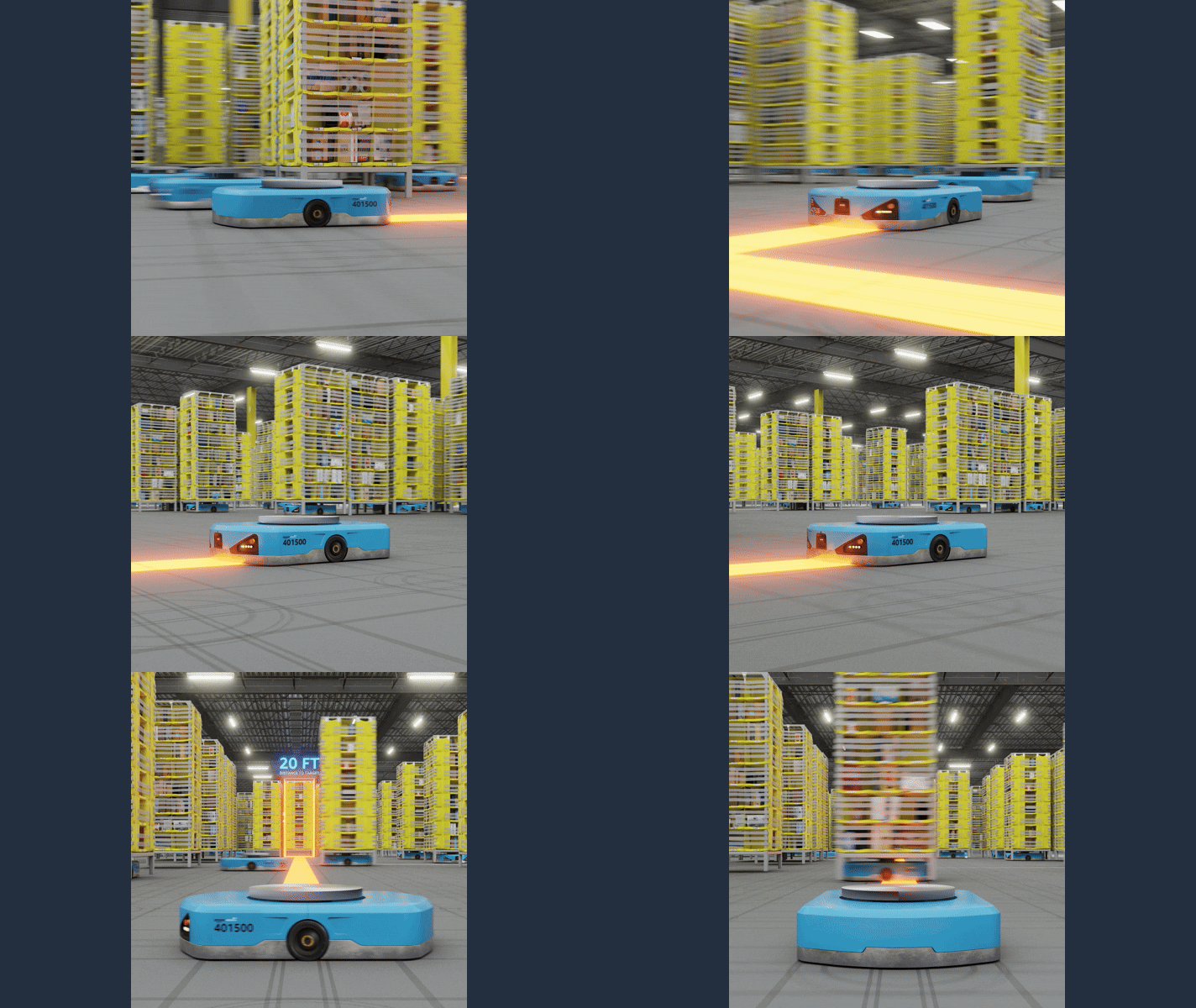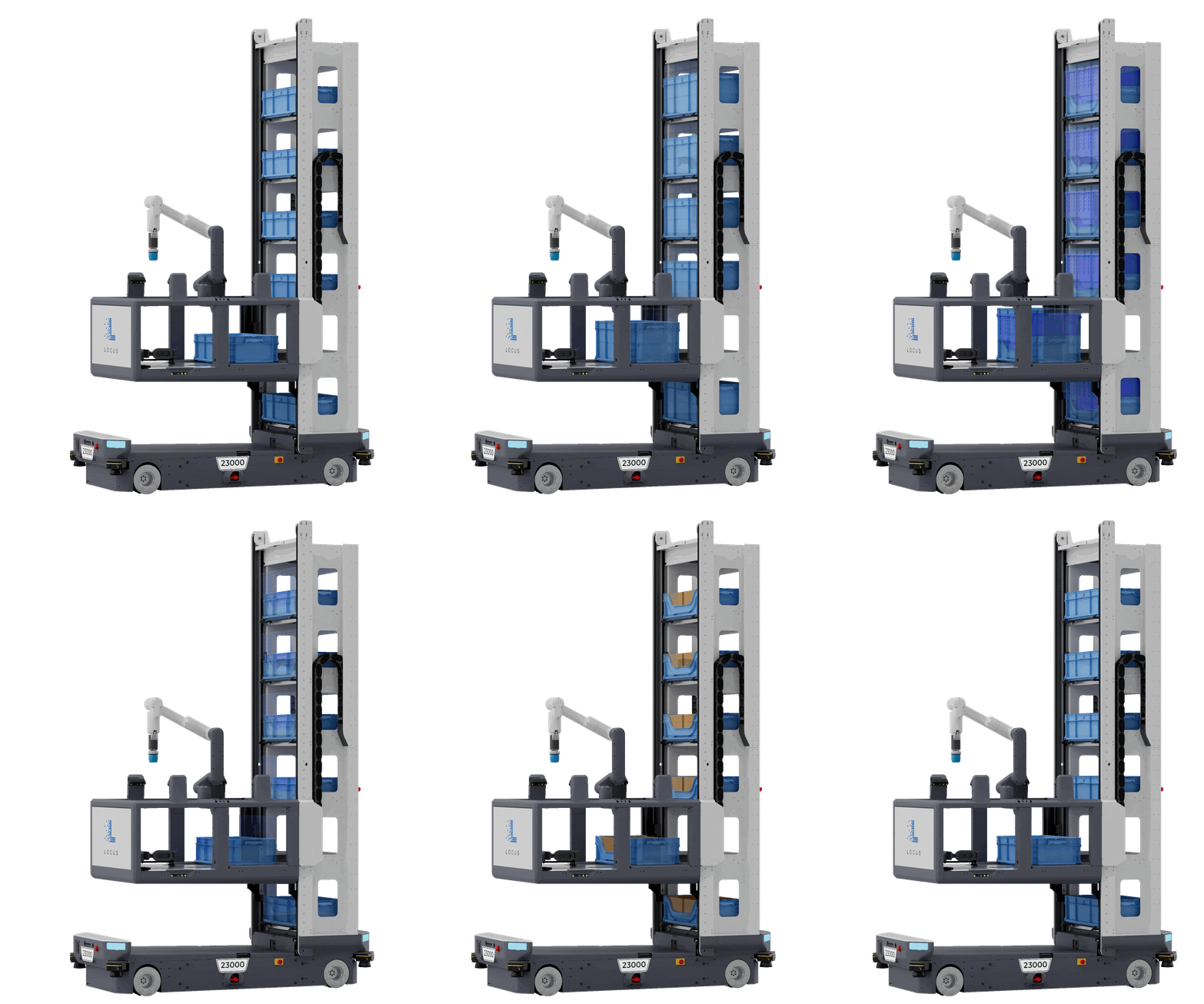
Locus’s April 2026 Array announcement listed picking, putaway, induction, drop-off, slotting, and replenishment within one coordinated system. These are different tasks sharing an environment, not interchangeable navigation goals. The release creates a practical question for mobile autonomy: how does a robot gather enough information to act when that information is incomplete, without turning a busy aisle into its experiment? Locus Array launch.
An unfamiliar environment presents two problems for a mobile robot: how to find a route and where it is allowed to look. Research can improve the first while leaving the second to the deployment. The distinction matters when exploration brings a machine near private areas, shared infrastructure, or work that should not be interrupted.
NoMaD, first submitted October 11, 2023, studied a single learned policy for both exploration and movement toward visual goals. The authors evaluated navigation on a physical mobile platform. Those experiments demonstrate a capability to investigate, not a general permission for robots to enter any reachable space. NoMaD paper.
Define the search boundary
Our recommendation is to specify allowed regions, forbidden regions, and conditions that require the robot to stop searching. A hypothetical inspection route should identify whether a closed door means wait, reroute, or report failure. Leaving that choice implicit asks a navigation policy to make an organizational decision it has not been authorized to make.
The Open-RMF project describes software for interoperability among robot fleets and building systems, including doors and elevators. Its project description, accessed October 11, 2026, illustrates that movement can depend on infrastructure coordination as well as a robot's onboard ability to navigate. Open-RMF project.
Evaluate the decision to stop
We would count appropriate stopping behavior as part of navigation quality. A system that recognizes it cannot proceed may complete less distance while providing a more dependable service. Record what it observed and why it stopped, so the operator can resolve the actual obstacle. Autonomous exploration becomes useful when its search strategy and its authority are equally explicit.
Exploration consumes more than time
In an unfamiliar research environment, a robot may move to improve its view or discover a route. In a warehouse, the same movement can occupy a crossing, delay another pick, or interfere with replenishment. The value of information must therefore be weighed against the consequences of obtaining it. A better view is useful only if the maneuver remains compatible with the operation around it.
This is why uncertainty cannot be treated as a single confidence number. The robot may know where it is but not which package is visible. It may recognize the package but not know whether the shelf is accessible. It may know both while lacking permission to enter a temporarily closed area. Each uncertainty calls for a different response.
A large fleet makes local choices interact
Amazon’s DeepFleet announcement described coordinating movements to reduce congestion and improve routes. It also described a diverse fleet, including robots moving inventory and others handling carts or packages. The relevance is that one robot’s useful detour can be another robot’s obstacle. Fleet coordination provides a wider context for local navigation choices, although the announcement does not publish a general solution for every mixed-traffic environment. Amazon DeepFleet announcement.
NoMaD separates exploration from a specified goal
The NoMaD research discussed below joins exploration and goal-directed navigation within a diffusion-policy approach. It is useful background because real tasks can alternate between seeking information and moving toward a known objective. Open-RMF addresses another layer: coordinating fleets and shared building resources. Neither should be read as a claim that an individual warehouse robot can improvise without operational constraints.
The practical system needs to connect these levels. A local policy can propose a movement, while the broader system determines whether a resource is available and whether the movement serves the current task. If those layers disagree, the robot needs a legible way to wait, reroute, or request help. Silent improvisation can create a harder problem for the rest of the fleet.
The exception policy is part of the product
A robot that always stops at uncertainty may be safe but unproductive. A robot that always tries another maneuver may create unpredictable delays or physical risk. Useful autonomy lies in the quality of the distinction: which uncertainty can be resolved through observation, which requires a different route, and which should leave the autonomous workflow altogether.
For a deployed mobile manipulator, that decision also depends on its load and task. An empty robot investigating a blocked aisle has different options from a robot holding an unstable package. The same map and destination do not imply the same permissible movement. This is one reason a video of navigation through a warehouse reveals only part of the system’s capability.
Locus Array’s range of announced workflows makes these questions commercially relevant. The product is promising flexibility across tasks, which increases the importance of clearly bounded behavior when conditions differ from the expected case. The next useful evidence is how often the system resolves uncertainty productively, how often it escalates, and what its choices do to the surrounding flow of work.
The research context
NoMaD, submitted in October 2023, used a goal-masked diffusion policy to combine exploration and goal-directed navigation. The research makes the transition between those behaviors explicit. In an operating warehouse, another transition matters: from autonomous uncertainty resolution to an exception that requires external help. That boundary should reflect the physical situation rather than a fixed willingness to keep trying. Repeating a maneuver with no new information can block useful work; stopping at every imperfect observation can make the system uneconomical. The useful middle ground is not a vague compromise but a set of observable decisions about what new evidence a movement can obtain and whether obtaining it remains compatible with the task. Original research source.
Sources & evidence
This archive preserves its original editorial date. Sources describe the events and announcements discussed; they do not establish today’s status.