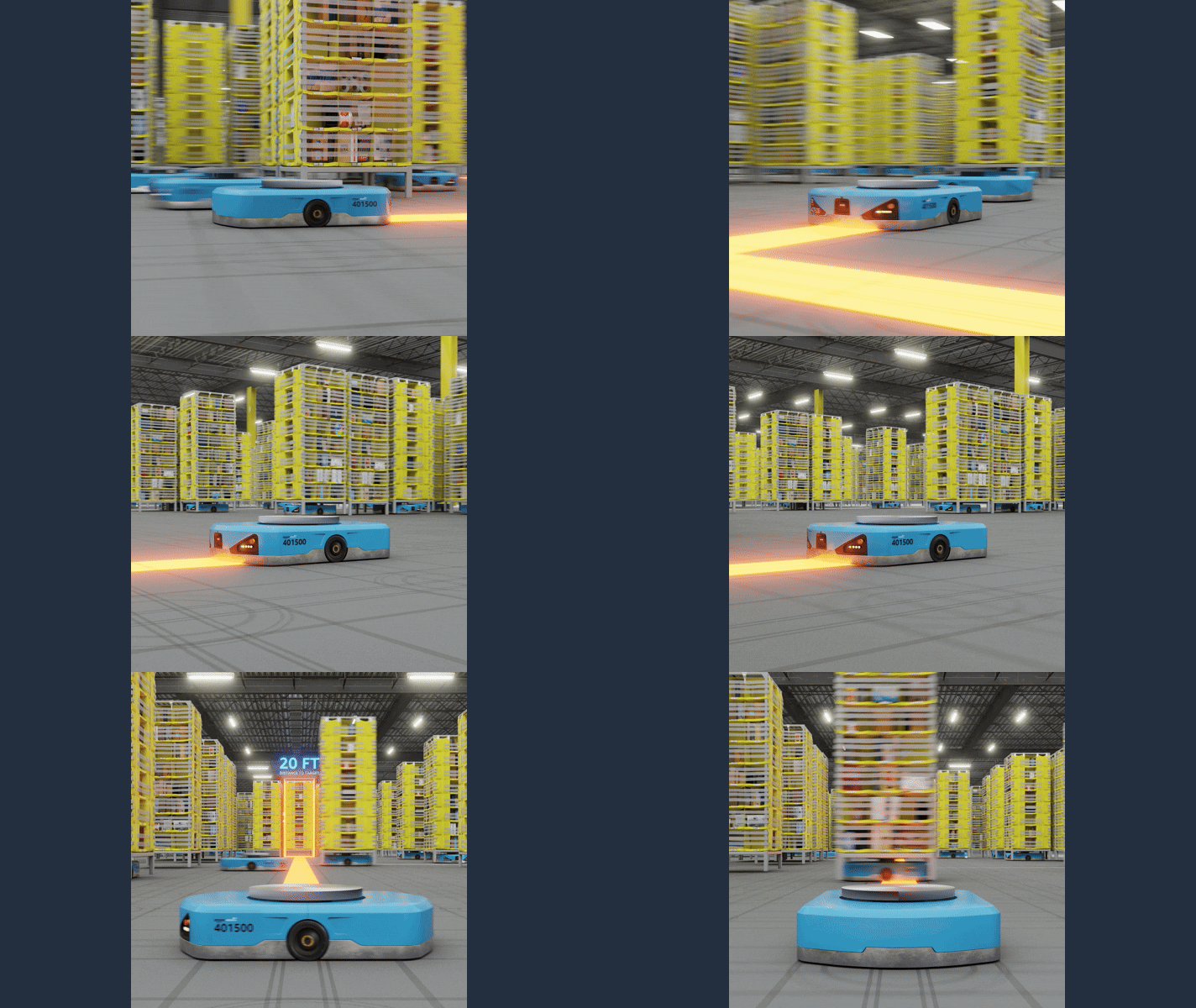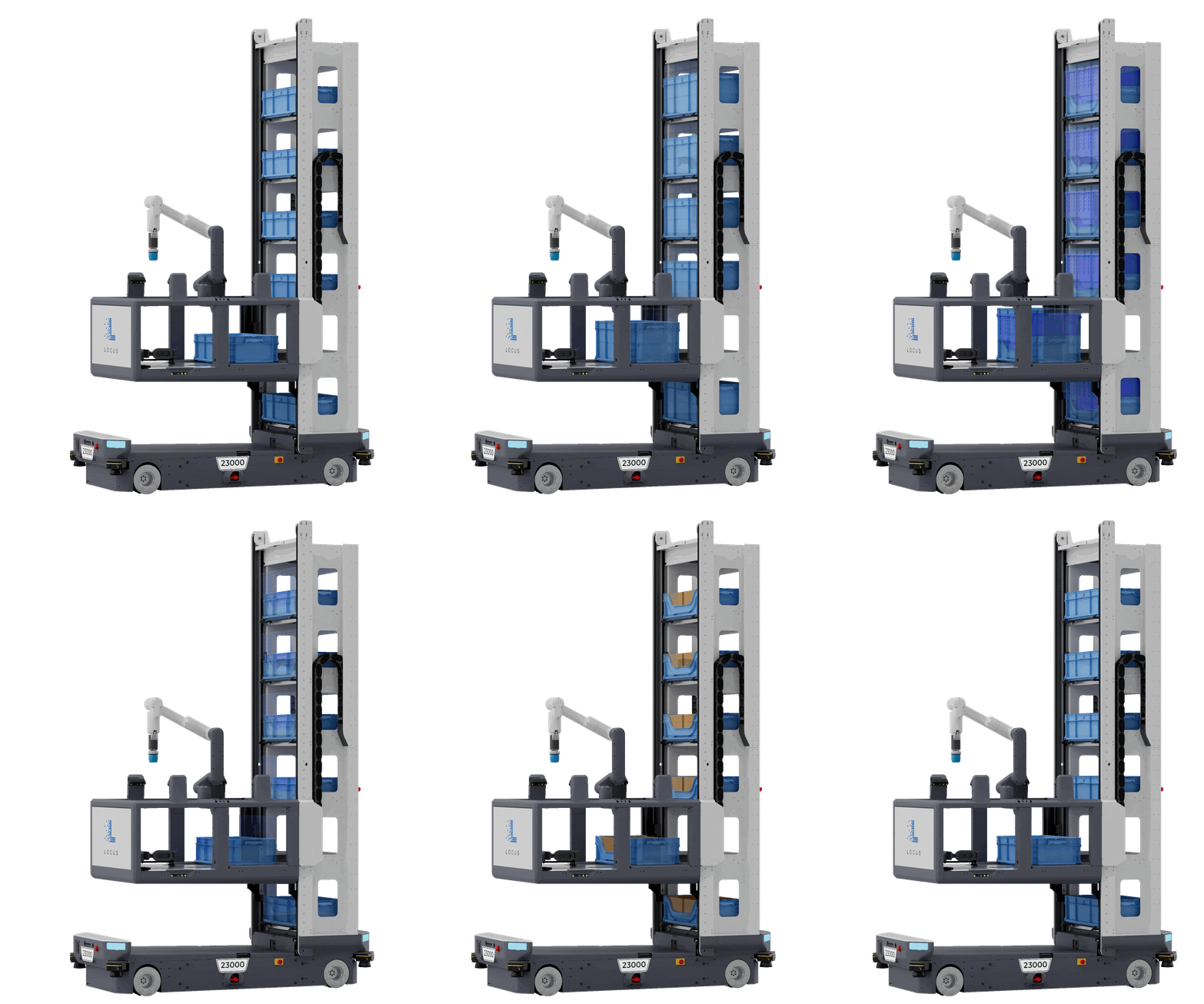
Locus Robotics launched Array on April 13, 2026, combining a mobile base, picking arm, and perception system to perform fulfillment work in the aisle. It named DHL Supply Chain as an early-access operator. The important change is the unit of work: the robot is expected not merely to reach inventory, but to manipulate it and continue the fulfillment process. Locus Array launch.
A mobile robot can navigate successfully and still fail its assigned job. It might reach the right corridor but stop on the wrong side of a door, or arrive at a destination where a handoff cannot happen. Autonomous navigation therefore needs an operational definition of arrival that extends beyond proximity to a target.
ViNT, submitted June 26, 2023, explored a general-purpose visual-navigation model trained from multiple robot datasets. Its research addressed transfer and adaptation to navigation tasks. The evaluated capability concerns navigation behavior, not a complete guarantee that a facility workflow will be finished. ViNT paper.
Describe the last meter
In our analysis, the destination should specify the state required for the next action. A hypothetical delivery robot may need to face a docking station, leave a passage clear, and confirm that the receiver is available. Those conditions should be observable. Otherwise, the planner can claim success while leaving the human to finish the most awkward part.
NoMaD's October 11, 2023, paper studied a unified diffusion policy for exploration and goal-directed navigation. It helps distinguish finding a goal from moving toward one already identified. That distinction is useful when deciding what the system may do if its expected destination is unavailable. NoMaD paper.
Plan for changed destinations
We would test blocked handoff areas, moved markers, and an occupied docking point as ordinary cases. The robot should wait, choose an authorized alternative, or ask for assistance with a clear explanation. Useful autonomy is not simply movement without a driver. It is the ability to connect navigation decisions to the larger job, including knowing when arrival has not yet produced completion.
Navigation and manipulation meet at the shelf
A navigation demonstration usually has an obvious ending: the robot arrives at a destination. A fulfillment task does not. The robot must stop where its arm can reach, observe the correct item, avoid obstructing other work, and leave the inventory in a known state. The final centimeters of navigation can therefore matter as much as the route through the building.
This changes the meaning of a successful trip. A robot can reach the correct aisle but approach from a position that makes the pick difficult. It can stop accurately yet block a colleague or another machine. A map coordinate is only one part of the task’s state. The mobile base and manipulator need a shared understanding of what the next action requires.
Fleet efficiency is a separate layer
Amazon’s June 30, 2025 DeepFleet announcement described a model for coordinating mobile robots and claimed a 10% improvement in fleet travel time. The company linked the system to its inventory-movement data. That is a fleet-level objective, distinct from the dexterity of an individual machine. The announced improvement is Amazon’s claim for its system, not a transferable figure for Locus or another warehouse. Amazon DeepFleet announcement.
The research explains why the destination matters
The ViNT and NoMaD work discussed below investigates general navigation policies and the relationship between exploration and goal-directed movement. Such research expands the kinds of routes a robot may handle. Industrial deployment adds constraints that are not captured by simply reaching a visual goal. The route may need to preserve a load, avoid temperature exposure, or arrive before a downstream station becomes idle.
A mobile manipulator intensifies those dependencies. Its destination is not merely a place; it is a place with a usable viewpoint, a feasible arm configuration, and access to the intended object. A failure at any one layer can cause a retry at another. That is why reporting navigation success without task completion can overstate the useful autonomy of a combined system.
The customer buys completed movement of goods
Array’s launch makes the integration challenge concrete. The promise is to perform work where the inventory already sits, reducing the need to move every item through a fixed station. That can offer flexibility, but it also distributes manipulation across changing aisle conditions. The commercial advantage depends on whether the system can sustain the combined task reliably, not just show each component working separately.
A useful comparison with other warehouse systems would preserve the entire workflow: how goods become available, how exceptions are handled, and when an order is ready for the next stage. Otherwise a fast robot can appear productive while another part of the operation absorbs its failures or waits for its output.
The broader lesson is that mobile autonomy is becoming an integration discipline. Perception, route planning, fleet coordination, and manipulation each contribute, but the customer experiences their combined result. Locus’s released platform is a current example of that convergence. Its operational significance will be established by completed, traceable fulfillment work across ordinary shifts, including the cases where arrival does not immediately lead to a successful pick.
The research context
ViNT’s June 2023 research learned visual navigation from experience collected across robots and combined learned goal-reaching with additional planning components. That is different from a warehouse system that must combine travel with a precise manipulation handoff. The comparison is useful because it separates reusable navigation competence from the constraints of the final task. A policy can generalize over routes while still requiring local adaptation at the shelf. Reporting both parts avoids an artificial choice between general intelligence and narrow engineering. A deployed machine can use broad learned capability for movement and highly specific checks for the interaction that completes the order. The quality of the connection between those parts determines how useful the autonomy becomes. Original research source.
Sources & evidence
This archive preserves its original editorial date. Sources describe the events and announcements discussed; they do not establish today’s status.