A robot policy has a deadline: its next action must arrive soon enough to respond to the world. A sophisticated sampling procedure is useful only when its additional computation improves the behavior that reaches the hardware.
An October 29 preprint studies Gaussian Action Readouts, a replacement for the final action-generation layer of tested flow policies. The method keeps the preceding network frozen and fits a compact distribution that can produce an action in one network pass. Primary source.
Layer speed is not complete-system speed
The authors report near-teacher task success and up to twice the inference speed in their evaluated settings. This does not establish the same gain for an entire physical robot: visual processing, communication and control still consume time. Primary source.
The paper also distinguishes the small fraction of training contexts used for fitting from the work required to prepare teacher statistics. The latter involves repeated sampling. Treating the fitting fraction as the full cost would understate the preparation burden. Primary source.
Simplification has to preserve useful alternatives
A compact action distribution can still generate different complete trajectories because each next observation changes the following action. That is different from proving that every useful mode of the original policy survives.
For engineers, the immediate opportunity is a controlled comparison at the action-generation boundary. Measure task outcomes and end-to-end latency on the same workload, including difficult cases where several responses are valid. Broader hardware tests and behavioral-diversity measurements would show whether the cheaper readout preserves the choices that matter outside the benchmark.
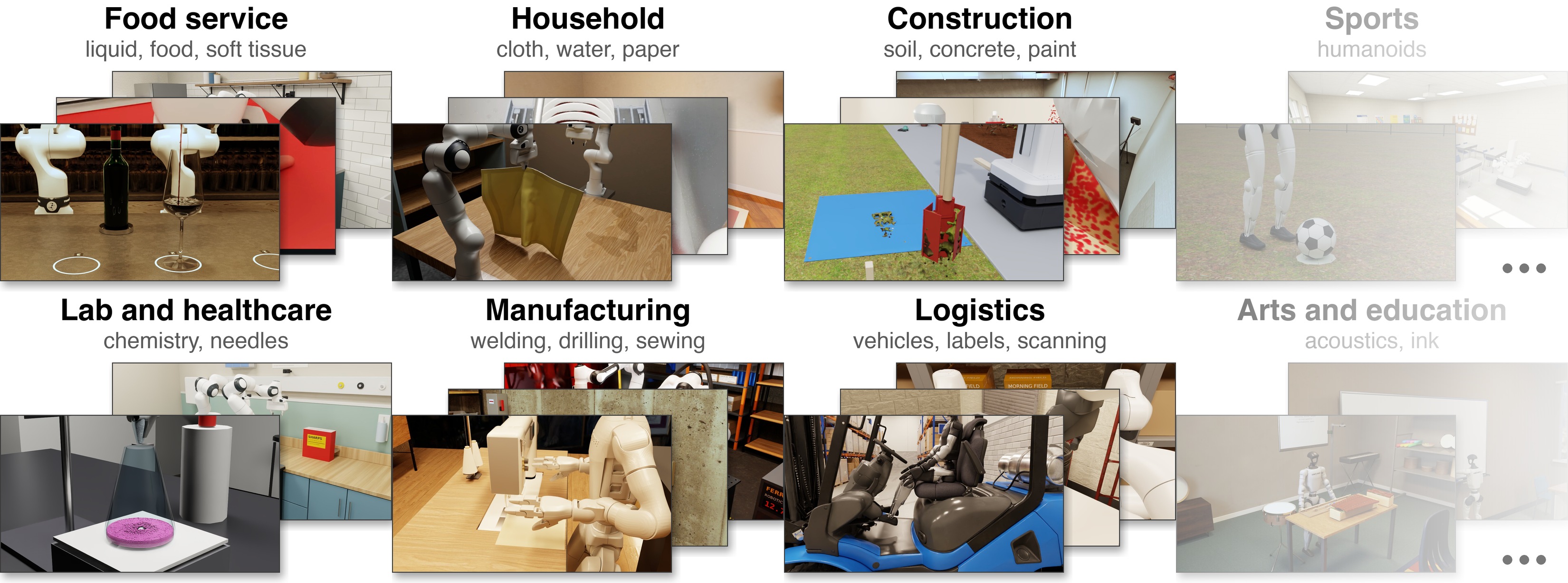
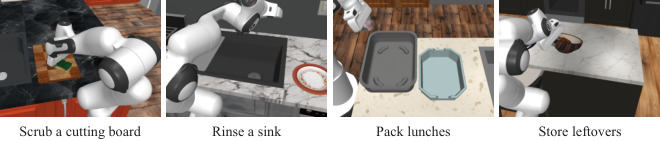
The source figure is reproduced unchanged under CC BY 4.0; attribution appears in the image caption.
Sources & evidence
Sources describe the announcements and evidence available when this analysis was published. Company claims are attributed; plans and trials are not treated as sustained operation.