A faster industrial arm does not automatically produce more accepted parts. The process also contains approach movements, tooling, fixtures, inspection and whatever must happen before the next cycle can begin.
ABB’s October 12 announcement of the IRB 1700 and IRB 1700ID combines that familiar constraint with a new hardware option. The company describes five variants spanning six to twelve kilograms of payload and claims up to twenty percent shorter cycles than comparable robots. ABB release.
Keep each comparison attached to its conditions
The integrated-dressing version routes cables and hoses inside the arm, a packaging choice that can affect installation and clearance. ABB also claims up to fifteen percent lower power consumption than the predecessor IRB 1600 at the same payload on OmniCore. That energy comparison is narrower than the cycle-time headline and should remain separate. Comparison conditions.
The announcement does not establish a universal percentage improvement in factory output. A cell dominated by process dwell or downstream waiting may gain less than one dominated by arm motion.
The application is the acceptance test
For an integrator, the immediate task is to compare the proposed arm using the intended payload, tool, path and fixture geometry. Energy should be measured per accepted part alongside cycle time, since a shorter motion can coexist with unchanged overall throughput.
If the smaller installation and motion gains remove a real cell bottleneck, the platform can create useful capacity. The next evidence is an application-level comparison that includes quality, recovery and maintenance, rather than treating the robot’s fastest movement as the production line’s output rate.
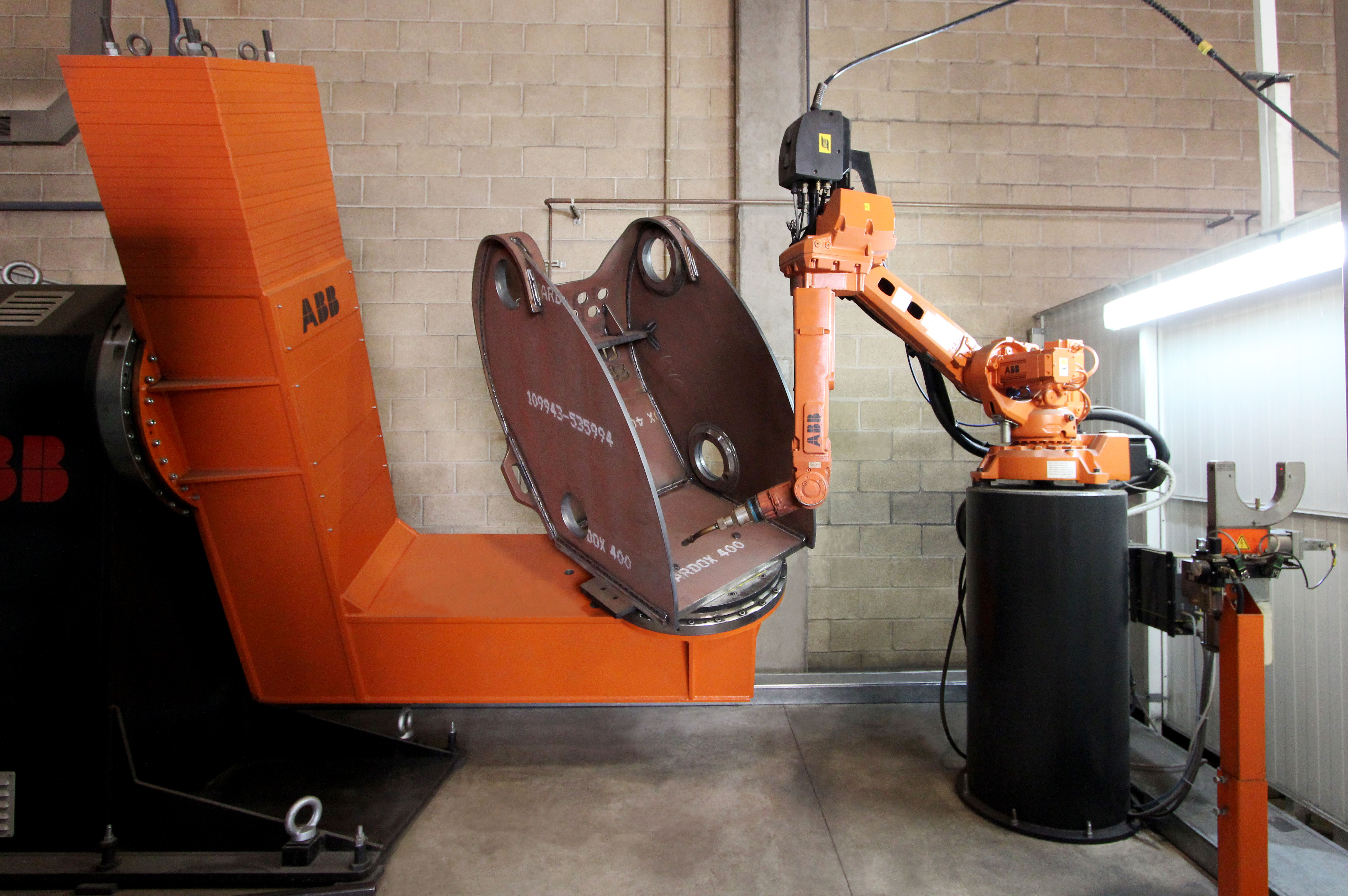
Context photograph: Ana 2016 / CC BY-SA 4.0; reproduced unchanged.
Sources & evidence
Sources describe the announcements and evidence available when this analysis was published. Company claims are attributed; plans and trials are not treated as sustained operation.